

Scientific Discovery
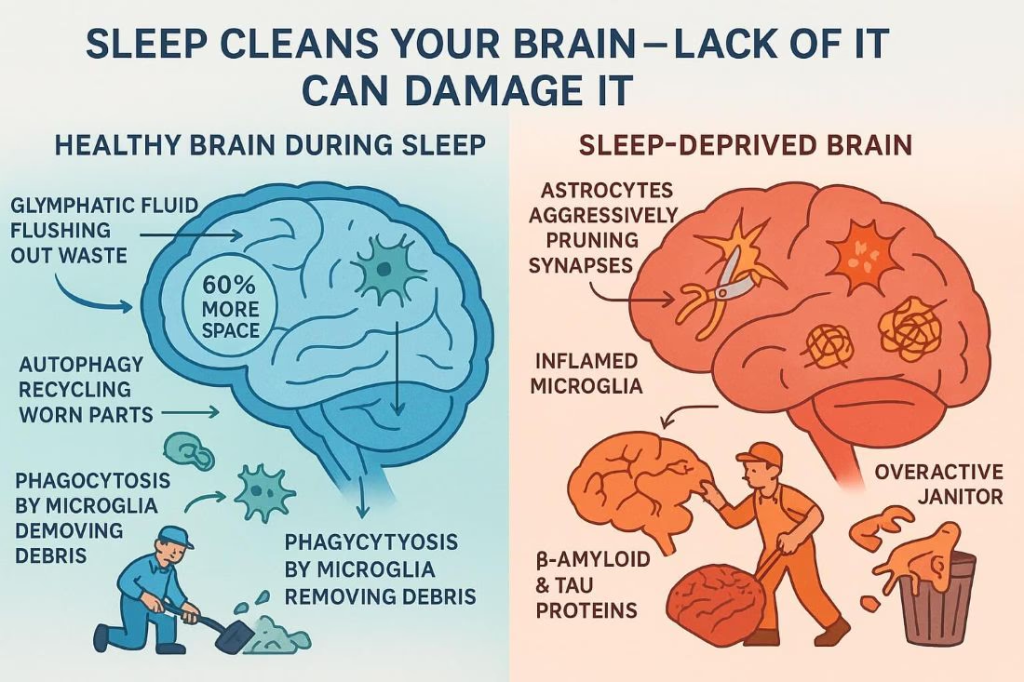
Until recently, science did not understand how the brain got rid of its metabolic waste, since it does not have a traditional lymphatic system. The discovery of Glymphatic System revealed that, during the deep sleep (N3),As brain cells (astrocytes) "shrink," increasing the space between them, cerebrospinal fluid flows more intensely, literally washing the brain.
Data in Focus
This "brainwashing" is a process highly dependent on the quality of sleep architecture.
- The Critical Data: It is during this process that the brain eliminates the Beta-Amyloid Protein and others Tau proteins,, whose accumulations are the main biological markers of the disease Alzheimer.
- Efficiency: Studies indicate that the glymphatic system is 60% more active These proteins are more prevalent during sleep than during wakefulness. A single night of total sleep deprivation causes an immediate and measurable increase in the levels of these proteins in the brain.
The Human Engineering Perspective
As experts in Human Engineering, We view deep sleep as a period of "critical maintenance" for biological hardware.
- For the Patient: Sleep fragmentation (waking up multiple times) interrupts N3 cycles, stopping the "wash" before it's finished. We ensure sleep depth allows for this neuronal detoxification.
- For Performance: The accumulation of metabolic waste results in what we call brain fog . A brain that does not complete its cleaning cycle loses the ability to process complex information and regulate emotions.
Clinical Evidence: "Sleep is not a passive state; it is your brain's most active cleanup window. Without deep sleep, your operating system accumulates errors that become permanent."
Did you know? During deep sleep, your brain cells can shrink to the point of being too small. 60% from its original size. This "shrinkage" is essential to create space for the fluid that washes away the day's toxins and waste, leaving your brain clean for the next morning.