

The human retina contains cells (ipRGCs) that aren't for "seeing" objects, but for detecting light intensity. They signal the Suprachiasmatic Nucleus—the brain's master clock. These cells are highly sensitive to blue light, which tells the brain it is "day," suppressing melatonin and stimulating cortisol.
Data in Focus
The problem is the imbalance: we spend the day in offices with dim lighting (500 lux) and at night glued to their bright cell phones. Outside, the sun offers 10.000 lux, the "fuel" your biological clock needs to function. Being on your phone before bed can delay your sleep by up to 90 minutes, leaving your brain in a state of artificial alertness.
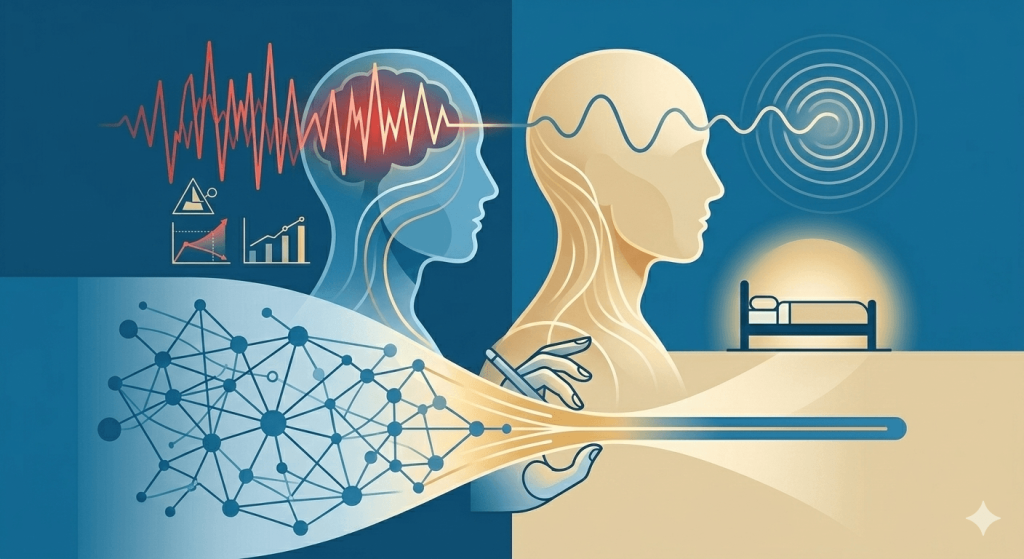
Human Engineering: The Solution
Light is not the villain; it's an energy management tool.
- For the Patient: The secret is the Morning Light Bath. Seeing sunlight within the first 30 minutes of waking up “resets” your system. It is this morning sun that ensures you will be sleepy 14 hours later.
- In Schools & Companies: Lighting should be dynamic—blue-enriched in the morning for alertness and warm/low-intensity in the late afternoon for recovery.
Remember: Light is the most potent drug for your rhythm. The secret is to seek the sun in the morning and protect yourself from screens at night.
Did you know? Looking at your phone in bed with the lights off sends a "midday" signal to your brain. This can delay the release of your sleep hormone by almost 2-hour.even if you feel your eyes are heavy.